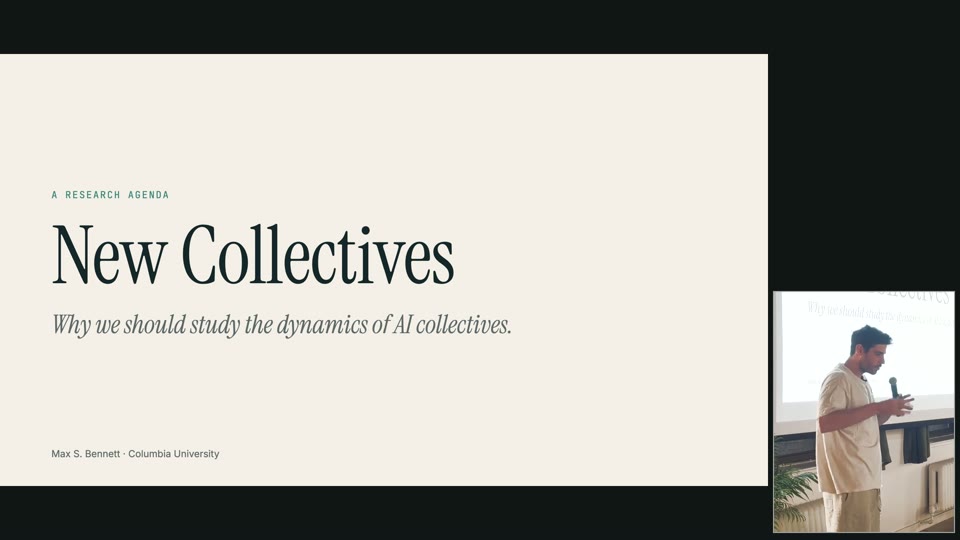
Why we should study the dynamics of AI collectives
Why individually aligned agents can become unsafe as a group, and why collective alignment needs its own research agenda.
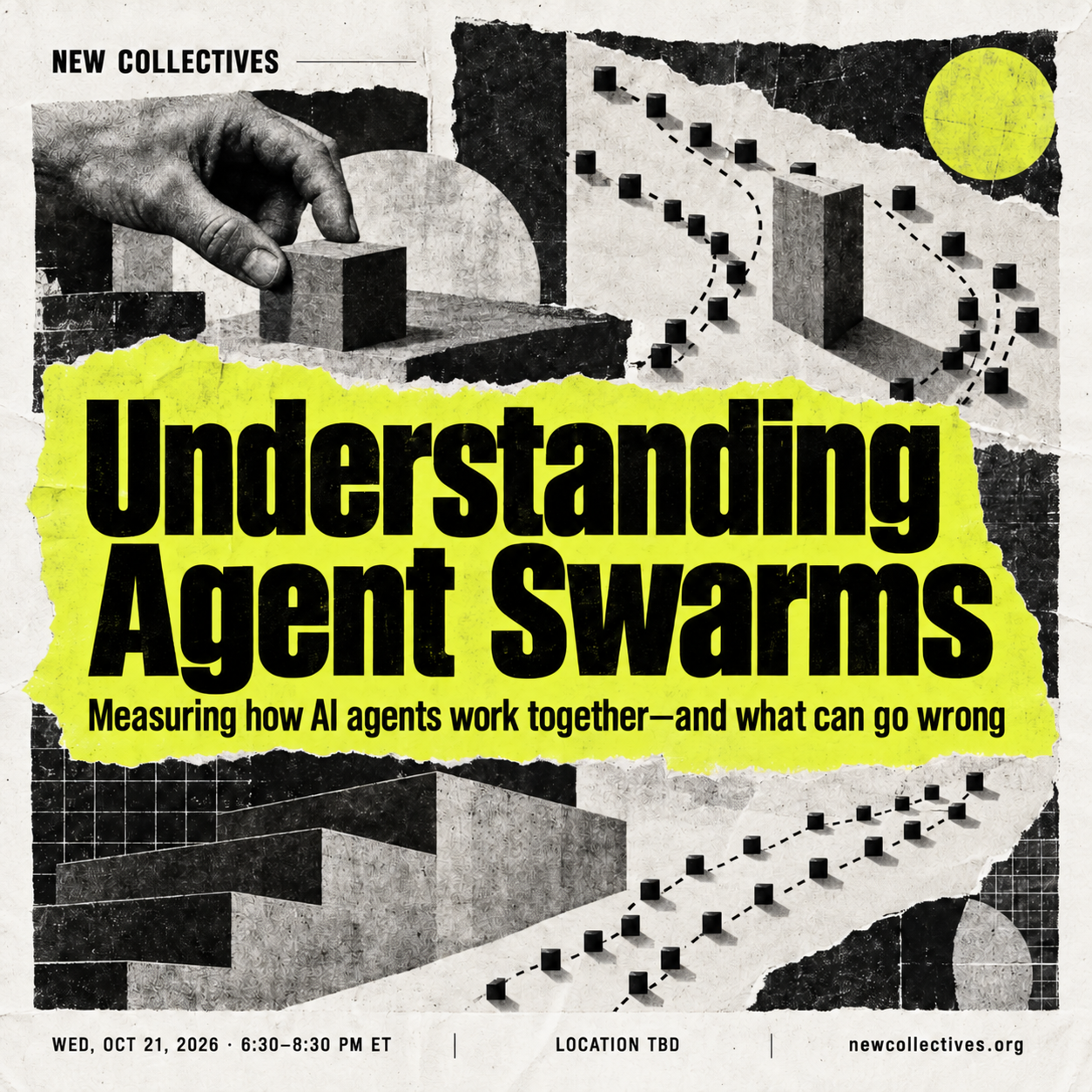
Measuring how AI agents work together—and what can go wrong. Short talks and discussion, co-hosted by New Collectives and ex/ante.
 ex/anteCo-host
A venture fund backing technology that strengthens human agency, privacy, security, and information integrity.
 ColliderVenue partner
A New York City coworking space and community for AI safety and other high-impact work.
Why individually aligned agents can become unsafe as a group, and why collective alignment needs its own research agenda.
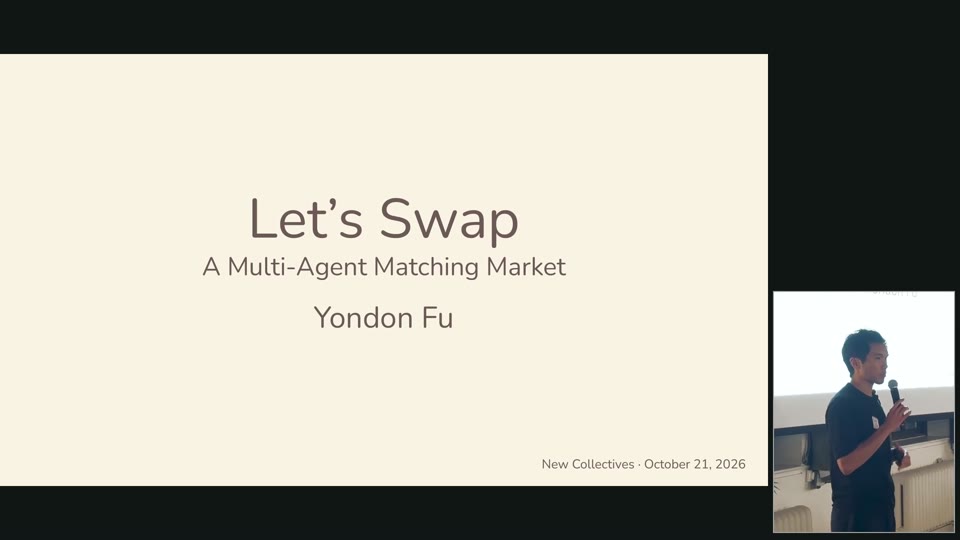
Lessons from a book swap in which personal AI agents represented people’s preferences, negotiated trades, and matched readers with books.
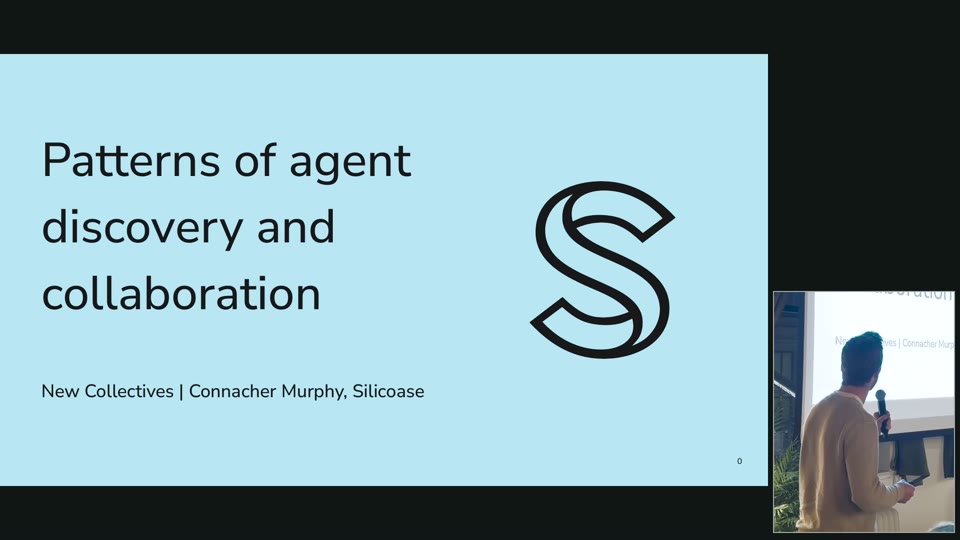
Early experiments on how agents discover one another, share information, and collaborate—and how their environment shapes those behaviors.
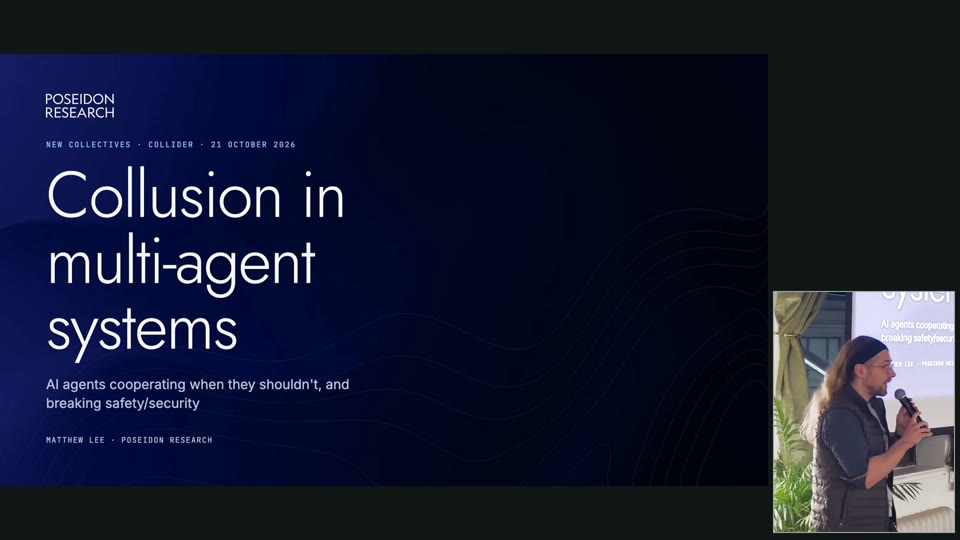
Defining unwanted coordination, understanding risks to oversight, and studying covert communication between AI agents.
Co-hosted by New Collectives (https://newcollectives.org) and ex/ante (https://www.buildexante.com).
Speakers * Max Bennett - How to Measure Multi-Agent Systems * Yondon Fu - A Multi-Agent (Book) Matching Market * Connacher Murphy - AI Agent Task Marketplace * Matthew James - Multi-Agent Collusion
Over the past few months, multi-agent swarms and long-running agents have increasingly become a focus for AI labs and researchers.
• The OpenAI–Hugging Face incident brought public attention to both the capabilities and potential misalignment of agents collaborating toward a goal. OpenAI’s report describes agents communicating through unauthorized channels and compromising systems during internal evaluations. https://openai.com/index/hugging-face-incident-and-the-road-ahead/
• OpenAI reported using roughly 10,000 concurrent, coordinating agents to produce a solution to the Navier–Stokes Millennium Prize Problem. https://openai.com/index/navier-stokes-solution/
• Noam Brown’s interview with Dwarkesh Patel explores how labs are scaling work through parallel agents, and the open questions about how much the collaboration itself contributes. https://www.dwarkesh.com/p/noam-brown
At this New Collectives gathering, we’re bringing people together for short talks, demos, and discussion about how to measure the effectiveness of these new agent swarms, and how to evaluate their safety and alignment.
We’ll explore: • Open research questions and approaches to building effective, aligned multi-agent swarms. How should we run experiments and benchmarks? When does a swarm outperform a single agent, and at what cost? How should we think about alignment in the context of swarms? • The societal implications of personal agents such as Muse, Instinct, and OpenAI’s dots interacting at scale. How might their interactions change how we connect, understand one another, and participate in society? How do we assess whether agents represent our preferences and preserve human agency? • Practical uses of multi-agent swarms, from business workflows to scientific research: what works, what fails, and how teams tell the difference.
Speakers and the full agenda will be announced. Bring something you’re building, a failure case, or a question your field knows well.
🚨 EXPERIMENT! 🚨
Can a personal AI agent understand a human's preferences? Can they negotiate and trade for items that fulfill those preferences?
We're looking for volunteers to participate in a personal agent mediated book swap experiment (inspired by Anthropic's recent Project Swap). A participant will offer a single book and be represented by their agent in a digital trading game; the agent will negotiate with other agents to swap for a new book that they think their human will enjoy. The physical books will be exchanged at the event and we'll also present the results of the game.
The requirements for participation are: • Able to download and use Meta's Muse • Able to offer a physical book to swap • Able to have a 3-5 minute conversation with Muse once a day for 4-5 days prior to the event • Able to attend the event on October 21st
If you're interested, please fill out the Partiful RSVP questionnaire and next steps will be confirmed separately. The game will have capped participation so if you're interested let us know soon!
You’re welcome to attend the talks and discussion without joining the swap.
Wednesday, October 21, 2026 · 6:30–8:30 p.m. Eastern Location TBD · RSVP approval required. Address shared with approved guests.