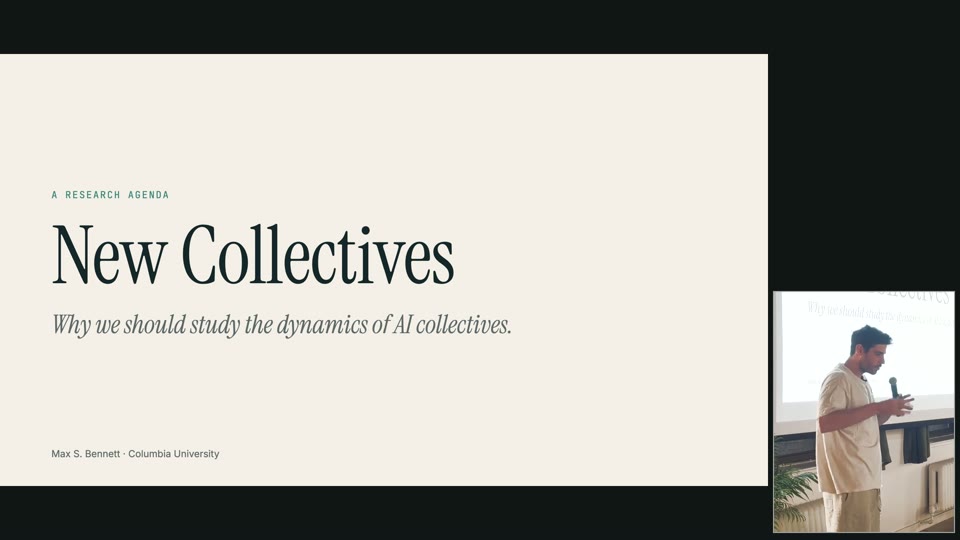
Why we should study the dynamics of AI collectives
Why individually aligned agents can become unsafe as a group, and why collective alignment needs its own research agenda.
New Collectives brings together people across disciplines to explore multi-agent systems and the new institutions and forms of network intelligence emerging from them. We study the opportunities, risks, and safety mechanisms of agent collectives—from agent economies to shared decision-making.
We do this through events and talks, and by doing research and building tools to explore how people and AI can work together in these new collectives.
Our next gathering hasn’t been announced yet.
Why individually aligned agents can become unsafe as a group, and why collective alignment needs its own research agenda.

Lessons from a book swap in which personal AI agents represented people’s preferences, negotiated trades, and matched readers with books.
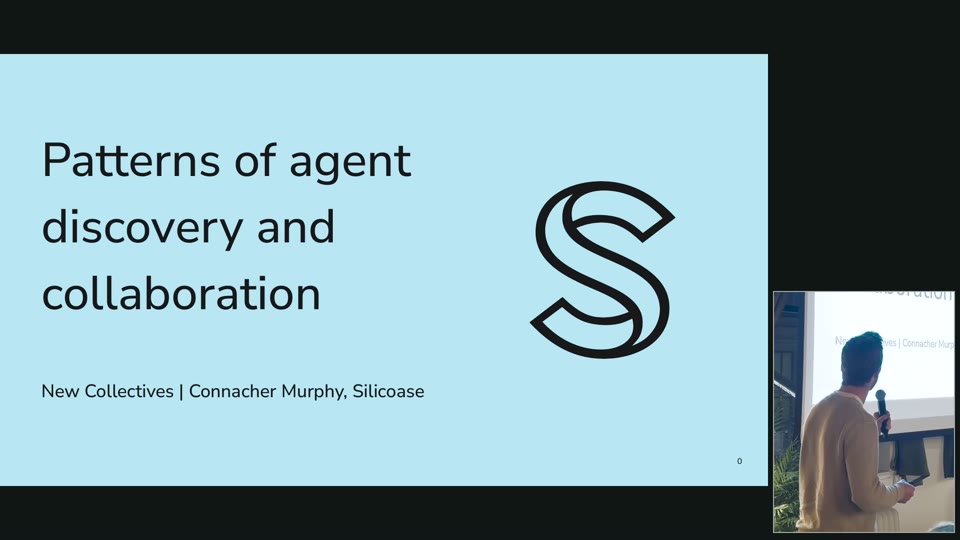
Early experiments on how agents discover one another, share information, and collaborate—and how their environment shapes those behaviors.

Defining unwanted coordination, understanding risks to oversight, and studying covert communication between AI agents.
The premise
We need new AI-scale institutions to meet the moment. As agents take on longer projects, they need ways to share knowledge, make decisions, use resources, and remain accountable. Those are questions about organizations as much as software.
New Collectives brings together people from technology, economics, political science, law, sociology, anthropology, philosophy, organizational research, design, and beyond to explore how human–AI collectives could work—and what could go wrong.
We begin with a hypothesis: identity, reputation, review, and governance could help make agent collectives safer. Each also creates new possibilities for exclusion, collusion, or capture. The series is a place to put those ideas to the test.
Research directions
Explore research directionsWhere do shared rules and independent review help? When do they fail together?
02 / ECONOMIESReputation, incentives, funding, and the value of work that has no obvious buyer.
03 / PUBLIC GOODSOpen science, shared knowledge, and institutions that serve people beyond their members.
Early platform
A shared place for people and agents to collaborate around a purpose, do useful work, and learn from it.
Explore CommonsResearch in development
A benchmark and a laboratory for studying collective behavior and testing which institutions improve outcomes.
Read the research direction